Material Crudo
Design and Artisan collaboration
Company: Material Crudo
Project type: Product design & Brand strategy
Role: Product Designer & Project Coordinator
Tools: Adobe Creative Suite, photography, woodworking, market research
Project Year: 2022 - 2024
Deliverables:
Delivered 100+ handmade products across Ecuador and internationally over a 2-year production cycle.
Developed and launched an Instagram pre-order campaign, generating consistent monthly orders.
Produced and styled all visual content: photography and video for marketing campaigns.
Coordinated a 2-year collaboration with 5+ artisans across glassblowing and woodworking.
Objective:
Material Crudo collaborates with Ecuadorian artisans to create high-quality, sustainable home decor products, ensuring fair compensation and recognition for their craft. The goal is to challenge the perception of local artisanal products and demonstrate the full potential of Ecuadorian craftsmanship.
About:
Material Crudo is a homeware design brand that draws inspiration from nature, showcasing the beauty of Ecuadorian materials through craftsmanship.
The work of local artisans in Ecuador is deeply undervalued craftspeople are rarely fairly compensated for their skills. I worked at Material Crudo as Product Designer and Project Coordinator, leading artisan sourcing, production management, quality assurance, and marketing strategy for the brand's first collection. My role was to build a platform that honors and fairly remunerates artisan knowledge while proving that locally made products can compete with imported goods.
Problem Space:
In the Ecuadorian design market, artisanal products are widely perceived as low quality, leading many consumers to prefer imported goods over locally made ones.
My biggest challenge was building a collaborative network with artisans that could bring original designs to life through fair trade, while maintaining the high-quality standards needed to shift that perception and demonstrate that products designed and made in Ecuador hold up to international standards.
Research:
As I delved deeper into research, I discovered that many master craftspeople in Ecuador don't even sell to the local market; instead, they export their work to North America and Europe, where it is truly appreciated and fairly compensated. After speaking directly with multiple craftspeople, I realized that they lacked a space to showcase their work to local audiences. This compelled me to find a way to educate the community about the real value of Ecuadorian craftsmanship.
Approach:
I led extensive research trips across Ecuador to identify and vet the right artisan collaborators, visiting studios, evaluating quality, and building relationships with makers whose work met our standards.
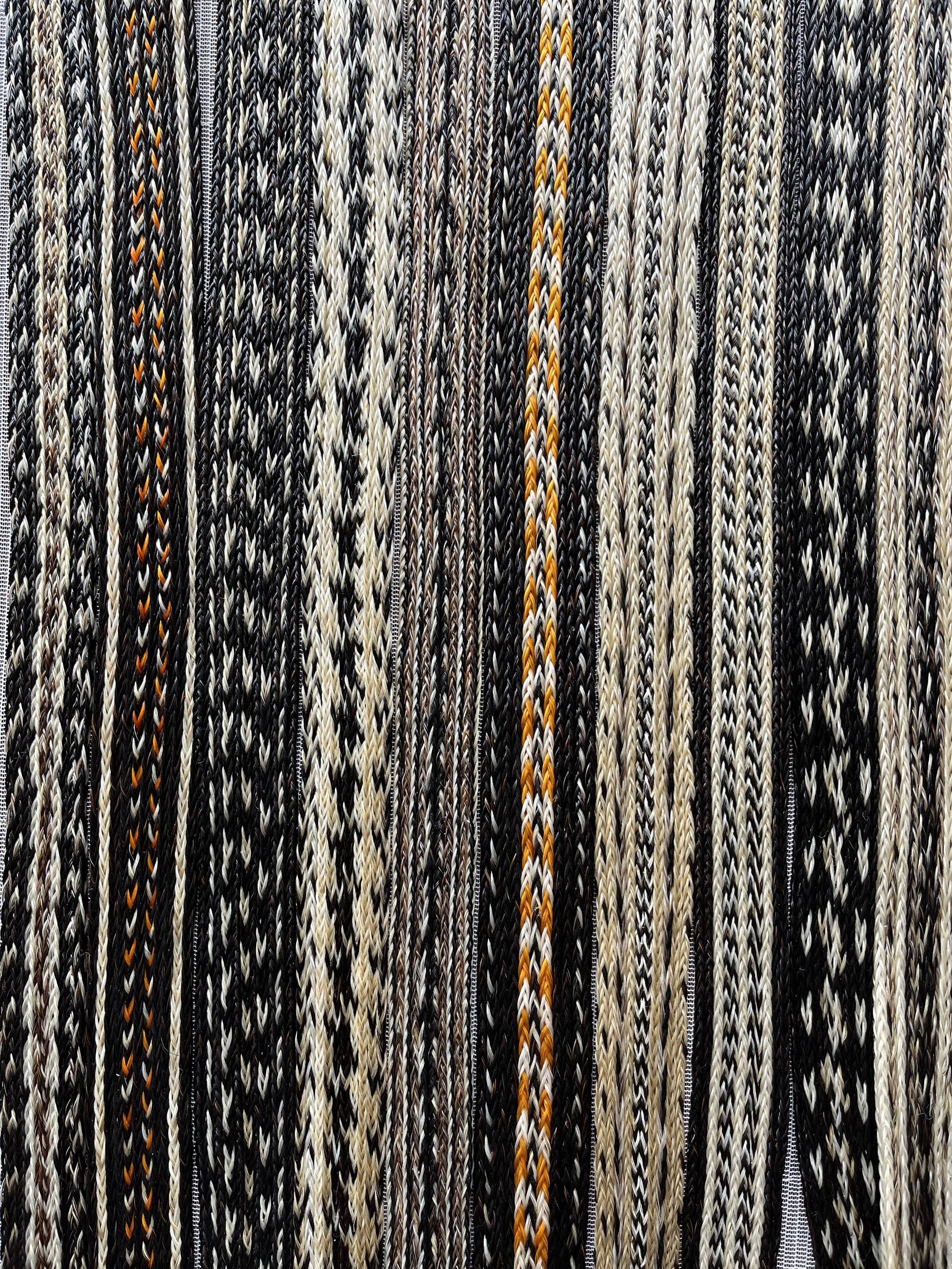
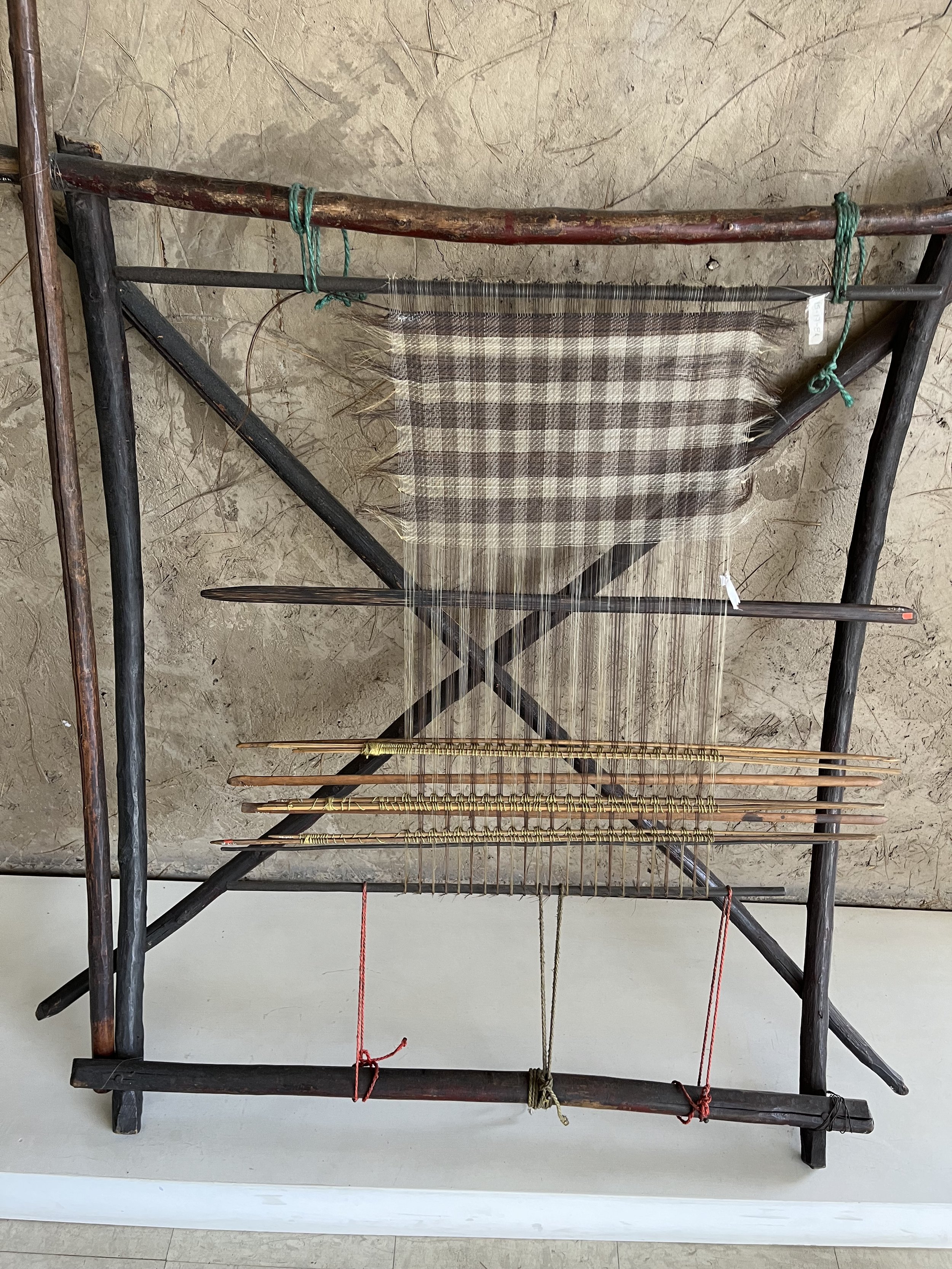
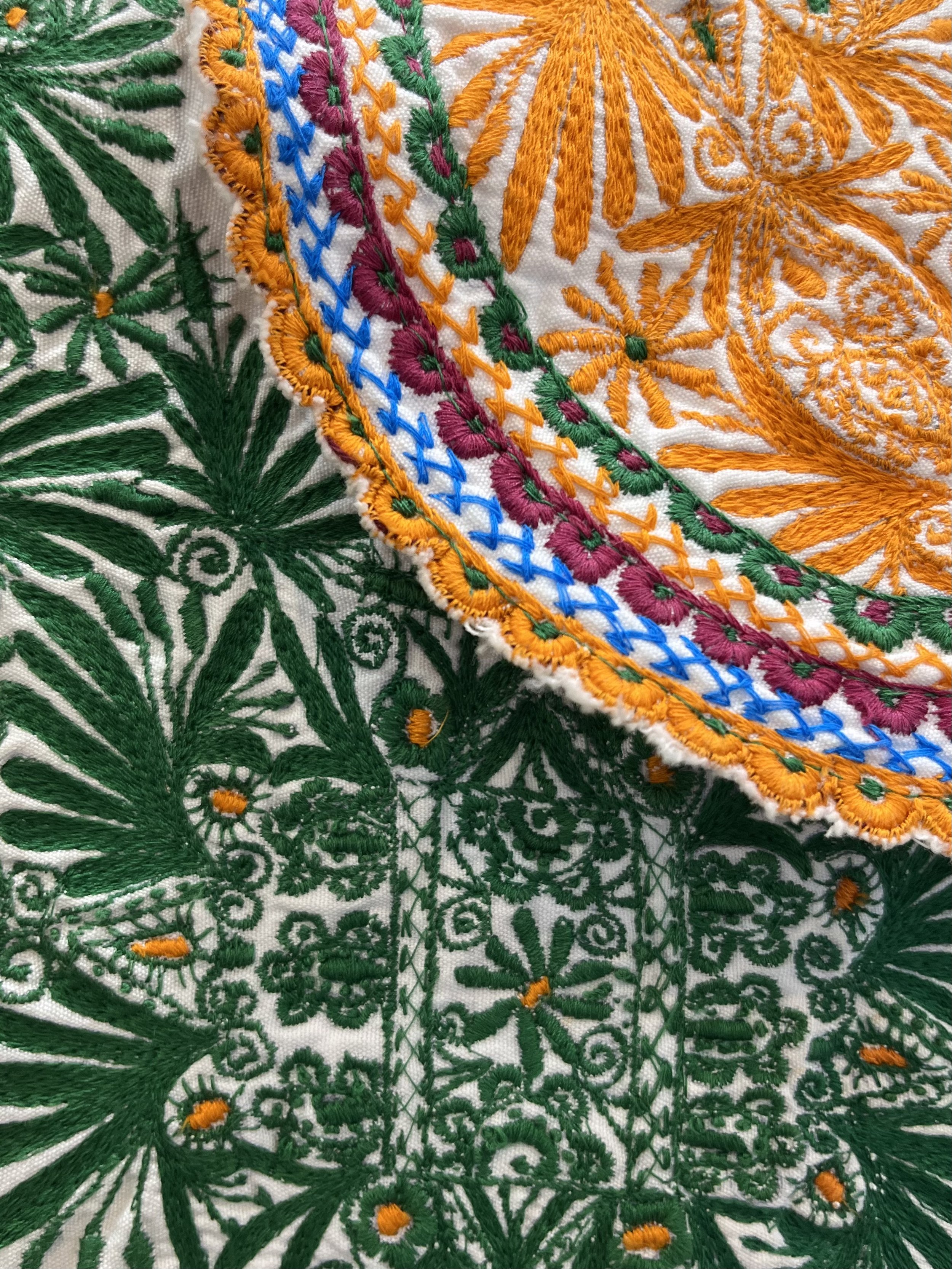
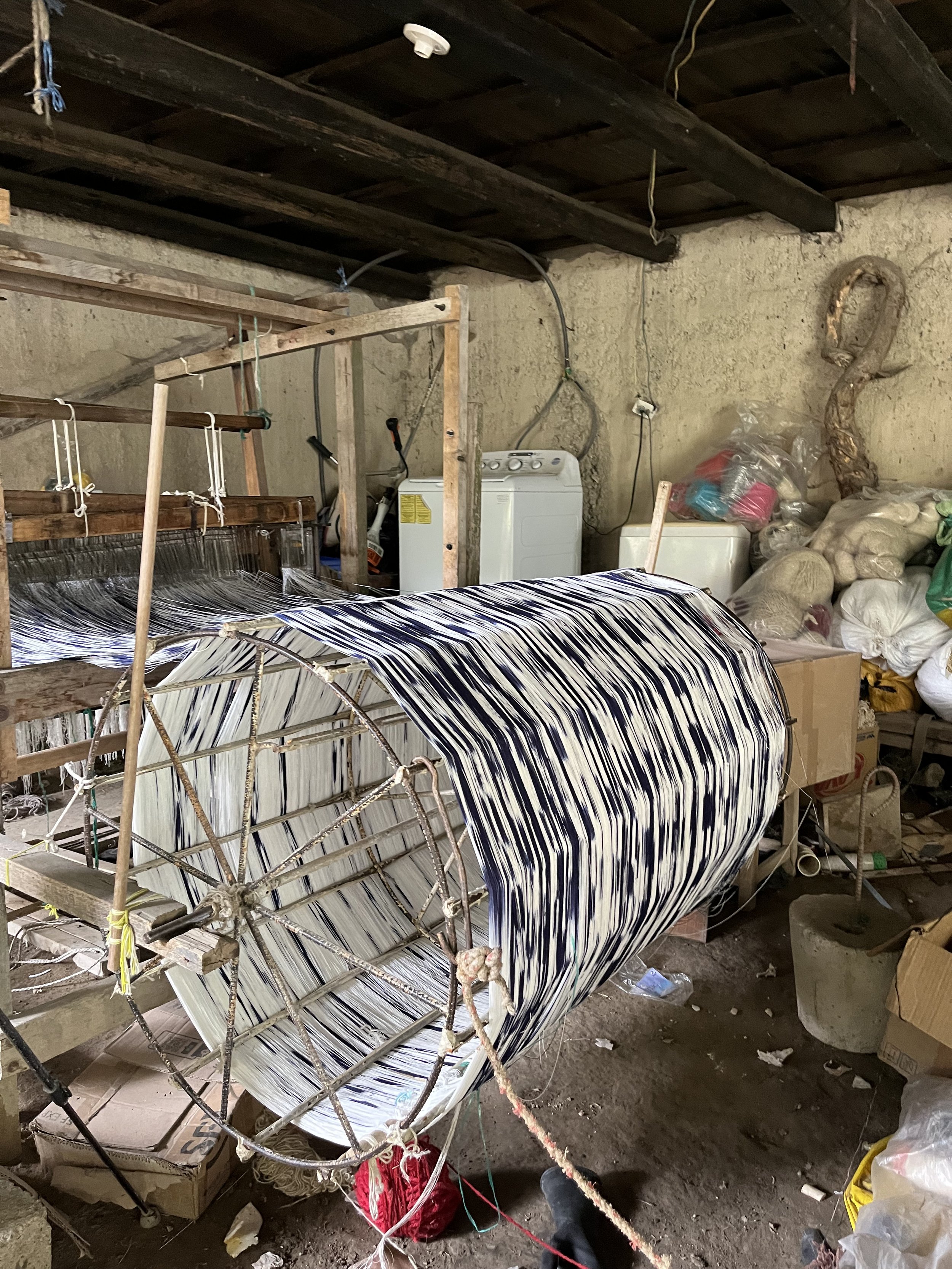


For our first collection, I wanted to create products that would stand out from what you'd traditionally find in the local market. During the scouting phase, I met the Lara family, master glassblowers who have been perfecting their craft for generations. Their work immediately stood out, and I knew they would be the ideal partners for our signature product.
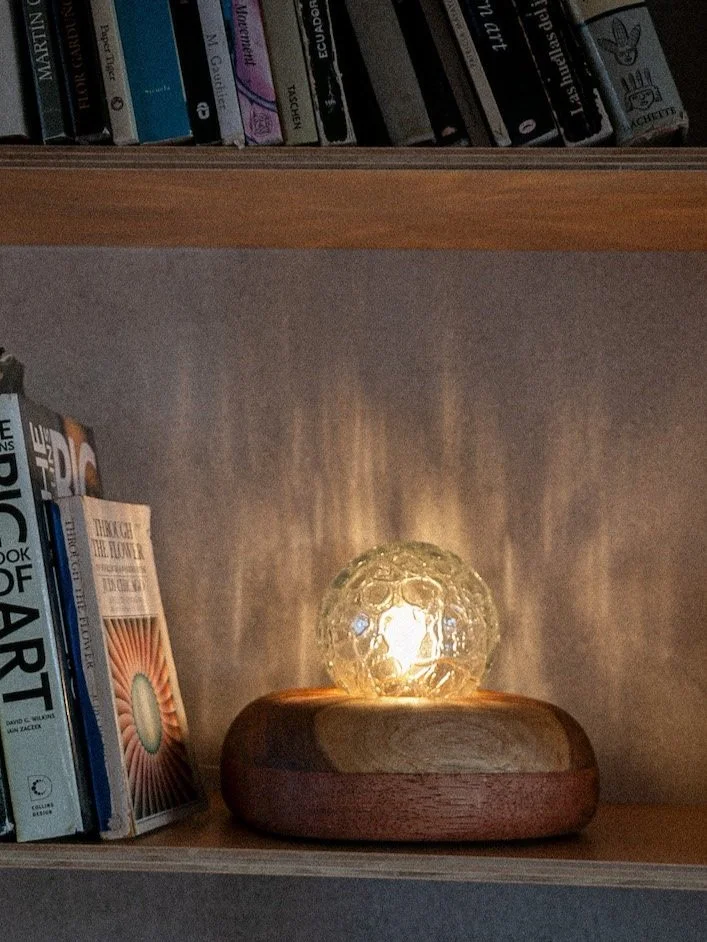
One piece in particular caught my attention: a textured glass sphere. I saw its potential immediately and began developing it into what would become our signature lamp.
I then sourced a carpenter, Alberto Guachamin, a skilled woodworker, who crafted the lamp bases from sketches I provided. Before work began, I established clear ground rules with all collaborators: effective communication, high-quality standards, and reliable delivery timelines.
I managed weekly check-ins with artisans throughout the production phase, adjusting and adapting as needed, and conducted constant quality assurance to ensure every product met our standards. In parallel, I launched an Instagram pre-order campaign that generated consistent orders from the start. Over two years, we produced, packaged, and delivered more than 100 lamps across Ecuador.
Building on the success of the lamp collection, I developed a limited-edition finale: two Valdivia-inspired stools. Together, these pieces completed our first collection "Andes."




Solution:
Material Crudo demonstrated that thoughtfully designed, fairly traded artisanal products can find a real market in Ecuador. By combining rigorous artisan selection, hands-on production management, and targeted digital marketing, we delivered a successful first collection, proving that local craftsmanship can compete with imported goods when given the right platform and presentation.
Key Achievements:
Coordinated a 2-year product development cycle with 5+ artisans across Ecuador, managing timelines, quality assurance, and delivery
Produced, packaged, and delivered 100+ lamps across Ecuador, validating the market for fair-trade, locally made design
Launched an Instagram pre-order campaign before production was complete, generating consistent orders over 2 years
Developed a limited-edition Valdivia-inspired stool line as the collection's finale, completing the "Andes" collection
Improving my process:
One of the biggest challenges was logistics and time management. Artisans typically work across multiple projects simultaneously, which makes it difficult to receive work on schedule. The final products met our quality standards, but the process revealed a clear need for more structured production planning.
Going forward, this collaboration would benefit from a formalized production schedule with built-in buffer time, clearer contractual milestones, and potentially a dedicated project manager to keep all parties accountable. These are systems I would implement from the start in any future artisan collaboration.